Friday, February 21, 2014

Private Eye - England

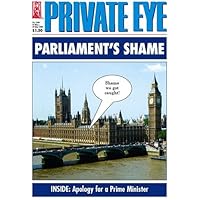
Private Eye - EnglandWhat I'm wondering is who still reads Private Eye? It started about 40 years ago, part of the satire boom that engulfed England in the early 60's. The post-war austerity was behind us and the situation was ripe for a bit of a revolution. Media attitudes towards the supposedly great and good, especially towards the monarchy, were deferential not to say obsequious, a characteristic still known in America as `respect'. Something had to give, and the dam burst with sudden and total ruin. The howls of outrage that the new mood provoked were among the most beautiful sounds I have ever heard in my life. To my dying day I shall remember a picture of Her Majesty at Wimbledon accompanied by her Secretary of State for Defence, the Right Honourable Fred Mulley MP. Mr Mulley had nodded off in his chair, and Private Eye printed the picture with the caption `Cabinet Minister Sleeps With the Queen'.

One notable point was that the new satirists were not particularly leftish in their politics. Peter Cook and William Rushton are dead by now, but Christopher Booker went on to help establish the Festival of Light, a muscular-Christian orgy of family values, and David Frost, now Sir David, is a stately pillar of the broadcasting establishment. Richard Ingrams, founding editor of The Oldie Magazine, has retained something of the oldie spirit but all from a rather erratic and personal standpoint and Private Eye goes marching on. It's not what it started as. Something like its original spirit can be seen today in the film, apparently controversial in America but not in England, Fahrenheit 9/11. It has settled into a steady format these days, with some brilliant cartoons and photo-montages, particularly on the front cover. This cover is the magazine's main link with its past and is always of a topical nature, but most of the cartoons inside are of a perfectly standard kind that you might find in regular newspapers. There are excellent book and media reviews, there is a very difficult crossword of a slightly adult and naughty type, there is still a prime ministerial spoof sometimes purportedly written by spouses (Mrs Wilson, Mr Thatcher) and sometimes by the incumbent himself as with John Major or the current pm as the with-it guitar-playing vicar of St Albion's writing in his parish magazine and usually with a contribution from the Rev Dubya of the Church of Latter-day Morons. However the focus has changed from satire to whistle-blowing. It is very good whistle-blowing and very necessary I should say, anonymous in the main but written by mainstream journalists who can't publish certain stories in their regular outlets. What I wonder is who are its reading-public these days?

I suspect it's mainly a loyalty readership 60'sish people in both senses of the term like myself. It certainly used to be available in America and I suppose it still is, but I think its base is subscribers rather than casual purchasers. The focus is mainly on Britain, but not exclusively. My guess would be that a high percentage of its American readers are Rhodes scholars and anglophiles of various kinds, but there is always a very interesting and hard-hitting `Letter from...' some part of the globe, always written in the same style. I get my subscription to it as a Christmas present each year, and I shall be interested to see which of us succumbs first the donor, the magazine, or myself. Long may all of us live, and long may Private Eye outlast us. The genie is out of the bottle and I hope not all the Queen's horses nor all the President's men can put it together again, to mix my literary allusions.

My introduction to Private Eye was in the '70s, when, as an American provincial, I studied in Britain. I still find its sense of humor gently wicked. It is satirical, and we all know that satire appeals only to those people who can discern it. But the contributors to Private Eye also do good work as investigative journalists, without partisan favoritism. (Things we sorely lack in American journalism, both intelligent satire and non-partisan reporting.) As a subscriber, I read my copy of Private Eye cover to cover and then I put it in the bathroom as toilet reading. Often my copy goes missing, to what purpose I truly cannot say. But Private Eye helps me to remember, in my senile rage, that it is still "a funny old world."

Buy Private Eye - England Now

My wife is from the UK and I lived there for a few years. We're both political and a little 'left of centre' (Canadian perspective).

This magazine is wonderful.. If you don't have any incite as to what is going on world wide this might not be the magazine for you. If you have a good sense of political humour, up to date politically re: UK, the world, etc. you'll love this magazine. And you'll read it from cover to cover.

We both spend hours reading each issue. Good perspective of British / World politics without getting depressing.

Read Best Reviews of Private Eye - England Here

British people, do you want to laugh at your government? Do you want to laugh at the American government? Do you want to laugh? this is topical satire at its finest. Do you know Have I Got News For You? It's like that in a magazine.

Want Private Eye - England Discount?

Gramophone

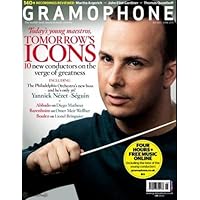
GramophoneGramophone has been published in England and elsewhere going back to the days of 78s and the gramophone, and it is still one of the leading classical music and equipment publications in the world. I'd say it is pretty easily the most expensive, too.

You get a lot for your money -about 200 pages in each issue with over 120 CD review plus up to a half-dozen extra pages of "replay" reviews, or reviews of CDs that have either recently been reissued (this is about 60 percent of all classical CDs) or CDs the writer thought were so special (s)he had to talk about them again.

In addition, there are more pages of advertising from CD companies in this magazine than in any other magazine, plus listings of all CDs issued that month in both the UK and USA. On this count it is the most complete review of new recordings available in the classical music industry.

I have subscribed for about a half-dozen years and still enjoy the magazine, although I am beginning to feel some oversaturation. I do not, however, enjoy the look of the magazine after its redesign of 18-24 months ago. It is far more "white" that I recall and not as easily readable. I also do not care for their three column production model, but that's just me.

A lot of Americans are put off by the way this magazine seems to be in bed with the music industry, also. Its editor, James Jolly, is pretty much a shill for the British music industry. I suppose this comes in part from survival instinct and in part because of the gentlemanly ways of Englishmen, who don't seem to value the independence Americans love. Most American publications do everything possible to distance themselves from the business side of the industry they cover.

On balance, this is a worthy magazine and one that probably is without peer in the classical music industry. There are plenty of other publications that reguarly review classcial CDs including a number of Internet sources, but do it as completely as Gramophone.

If you think the $77 subscription cost is pricey, pick one up in a store and see if you like it first. Be prepared, however, to pay up to $9 for that single issue, for this is a very pricey magazine.

GRAMOPHONE has been around as long as recordings have been available, informing the public about the new releases, providing cogent, intelligent reviews, giving the UK/European outlook on things musical, and in general being the bible for music review magazines. In recent years it has added interviews with living composers and artists and others involved in music and in doing so it has been able to secure its position on the newsstands and in subscriptions when everyone seems to be ignoring the printed word and opting for ezines. Yes the price of the magazine is high, but the quality of writing is also high. And may it never come to a point when all of our information about the arts is relegated to the computer. It is nice to have journals of this quality to read, re-read, and to at times save for personal libraries when such articles as those about John Adams come 'round. This is a journal worth the price!

Buy Gramophone Now

Conventional wisdom and damned statistics conspire to persuade that the population of classical music listeners is declining measurably year upon year. You'd never know it from reading GRAMOPHONE. Readers are typically devotees of the musical form and not about to let the rest of the world persuade them that their devotion is misplaced or--horrors--out of date. GRAMOPHONE obliges them with passionate coverage of the artists, the music, and the industry.

A case can be made that the monthly cds alone are worth the formidable price of a subscription. For those who are open to the argument, the interview of an eminent Beethoven critic on the September disk is likely to be seen as irrefutable evidence, such is the passion and understanding on display there.

The features make for fine reading and occasional riveting insight into the lives of composers and artists. The reviews are the spine of the publication.

That the population of not-what-it-used-to-be critics of this publication is so large is perhaps as much evidence of the traditionalist preferences that season our aesthetics as of any actual decline in the magazine.

For this reviewer--like many GRAMOPHONE readers a passionate amateur who can scarcely imagine life without this living legacy of music--the magazine remains a fascinating distraction and welcome visitor to my mailbox.

Read Best Reviews of Gramophone Here

The legend goes that there was a time a few decades ago when "The Gramophone" was the unquestioned authority for reviews of recordings of classical music.

Whether or not that legend is true (I'm too young to know), Gramophone's time has definitely passed. Today there is a multitude of sources of free information on classical music on the internet, from newsgroups to websites. Some of it is less well-informed than Gramophone's criticism, but some of it is more well-informed. What is undeniable is that, for the price of a few mouse-clicks, it is possible to find a far greater range of reviews of recordings on the Internet than Gramophone (with its British-based critics) can offer.

What is more, Gramophone is tied to a business-model for the classical music industry that is fast becoming obsolete. Historically, the most important classical recordings were issued by a few so-called "major" companies such as EMI, Deutsche Grammophon and CBS (later Sony). These "majors" would buy lavish advertising spreads in Gramophone and so finance the magazine. In return, Gramophone would devote lengthy reviews to the majors' new releases and would produce pages of fluffy interviews with musicians under contract to the majors.

Today the situation is different. The most interesting new release is more likely to appear as a MP3 on an obscure Russian website than on a new CD from Sony. Small companies, dedicated solely to classical music recordings, produce great results on shoestring budgets while the "major" corporations have virtually abandoned new classical recordings.

This development causes problems for Gramophone's business model. The new players in the classical music industry don't have the publicity budgets to fund a glossy magazine like Gramophone through advertising. With Gramophone's implicit bargain: "advertise with us or we won't review your recordings", the magazine seems to be becoming more and more irrelevant.

If you want to subscribe to a classical music periodical, I recommend "International Record Review" or "Fanfare". Both offer substantially more reviews per month than Gramophone. But most of all, I suggest checking out the huge range of classical music information available for free on the web and usenet.

Want Gramophone Discount?

Progressive Populist

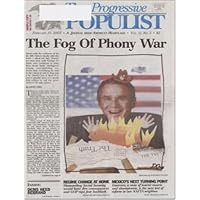
Progressive Populist'The Progressive Populist' delivers 22 issues a year packed with insightful articles from people like Amy Goodman, Jim Hightower, Garrison Keillor, Patrisia Gonzales and Ralph Nader. It provides plenty of space for 'letters to the editor.'

With subscriptions for less than $30, it is a bargain and a good tool for sharing progressive thought with others.

The only thing wrong with THE PROGRESSIVE POPULIST is it publishes 22 times a year instead of weekly. A digest of people's pundits and news unfiltered by the conglomerates that control the majority of American news, THE PROGRESSIVE POPULIST belongs in the information mix of anyone who realizes they can't trust corporate media, where reporting truth is a conflict of interest. As I write this in May, 2011, the latest edition of THE PROGRESSIVE POPULIST includes an article by Alexander Cockburn challenges the hype about the so-called revolution in Libya. Another piece debunks the myth that the United States Postal Service loses money. While a weekly dose of Cockburn, Ralph Nader, Jesse Jackson, Ted Rall, Amy Goodman, Dean Baker and other columnists THE PROGRESSIVE POPULIST carries would be great, reading them 22 times a year beats not at all.

Sure, you may have PROGRESSIVE POPULIST contributors such as Dean Baker showing up in your TRUTHOUT e-mail digest, or maybe you're on Ralph Nader's e-mail list. But in every PROGRESSIVE POPULIST issue I, for one, read several informative pieces I see nowhere else.

THE PROGRESSIVE POPULIST's "Dispatches" section reports news you should have but won't necessarily get from your daily, conglomerate-owned newspaper. I read "Dispatches" first.

Subscribe to THE PROGRESSIVE POPULIST.

Buy Progressive Populist Now

Advanced Photoshop

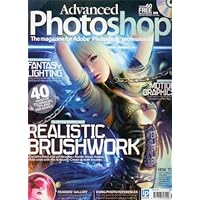
Advanced PhotoshopOne could argue that since it is "Advanced Photoshop", the instructions could be just cursory , but I would argue it is a poor writing. Let's admit it what most people want is to see some inspiring work and the be able to reproduce it using the instructions given. Well, it is almost impossible , the instructions are more like hints rather than step-by-step tutorials. I would stay clear of this magazine if you are a beginner or intermediate photoshop user and if you are advanced, you should be writing in the magazine not subscribing to it, right? 3 stars for some nice photo illustrations.

Just got my first issue! I haven't had the chance to read cover to cover but I did read full articles here and there and skim through the full thing. Here's what I found:

Pros:

1)Beautiful, beautiful magazine. Very visually pleasing and very nice/clear layout and very high quality printing.

2) Jam packed with info! I was not expecting there to be so much info in this magazine. From tutorials to new features and a FREE disc of resources in this issue? Brilliant!

Cons:

1) While it's jam packed with info, I feel the content has "holes" so to speak. I'd like a little more detail in the step-by-step tutorials. While I do agree that a lot is left up to the creator in any creative tutorial, I still feel like they could give a little bit more on how they achieved each step. It really is for advanced or intermediate/advanced users....I don't think beginners could get any info out of this easily. I've been using PS for almost 15 years and even I am struggling with some of what they're trying to describe.

2) The font size is TINY. I compared it to some other magazines figuring it was just me but no, noticeably smaller. Probably like an 8-10pt font throughout the mag.

3) Going hand in hand with the font size (and this is the most important issue I have with the magazine), the thumbnails in the tutorials are TINY...to the point where you can barely see the screen cap of the settings being portrayed. I understand that to pack this much info in this normal sized magazine you have to make some sacrifices..but I don't think the tutorial thumbnails should be one of those sacrifices. I would really like to SEE what they're explaining...but better than no thumbnails at all!

Overall I give it 3.5 and rounded up to 4 simply for the sheer quality of magazine. Very happy with this fist issue (#110) and cant wait to see what the next issue has in store! I do consider it a good investment for PS users...but you at least have to know the program very well to be able to get much out of this. It sure does get the creative gears turning and gives new ideas for new projects. Very happy with it and it's a great addition to my archive.

Buy Advanced Photoshop Now

I can't quite put my finger on why UK magazines are so darn good looking. Every Advanced Photoshop issue contains layout that is exquisite, the content is awe-inspiring. Yes, it is advanced, but there's something there for everyone from intermediate to advanced, sure to stir your creative juices.

Read Best Reviews of Advanced Photoshop Here

Thursday, February 20, 2014

Biotechniques

BiotechniquesMost journals you read in the lab are geared to your speciality These journals have research articles that are reviewed by panels of scientists in the discipline and are publications for advances in science. But "Biotechniques" was ground-breaking in that it published articles on the "how" of science rather than the "what" or "why" of science. The articles are peer-reviewed, but they focus more on applied science, techniques and methods. Articles might feature information about using new instrumentation, or new chemistry, reagents, or a way of doing a particular assay in a new method. It's also a good place to find out about new products and reagents.

If you do bench science in biotech, this magazine could be a valued addition to your monthly mailbox. It's not a research magazine in the usual sense. Instead, it presents small advances that you may be able take back to the lab and use immediately. They're practical, pointed, and presented in specific detail. Some times, they're so specific that they address the performance of specific vendors' instruments or reagents. This is truly a goldmine of hard-working information.

The problem with a commercial goldmine these days is that you have to move about a tonne of ore to get a gram of gold. Likewise, these reports offer pinpoint coverage over the whole map of biotech and if your work isn't exactly at one of those pinpoints, then it's probably a clean miss. There are occasional articles on computation techniques my main interest, but something that no biotech worker can wholly ignore. As with the wet-science articles, the computing reports are very pragmatic. I have to admit, I'm more interested in fundamental algorithms than in rough answers based on clever Perl scripts organizing people's tools and data.

This looks like a great magazine for people solving daily problems in bio/chem labs. Maybe not this month or next but sooner or later, it's bound to have a tip that works for you if you're the right kind of reader. I'm just not.

//wiredweird

PS: Don't let the exaggerated list price put you off. You'll probably see a Biotechniques booth at some trade show some time soon, and you'll find a much better price. One extra rating star for being very affordable.

Buy Biotechniques Now

Tricycle : the Buddhist Review

Tricycle : the Buddhist ReviewThis magazine helps you understand Buddhism a little bit at a time. It, however enormously motivates you to meditate. Especially in the western culture, where materialism is so rampant, there is little to motivate you to sit still and spend time with yourself. This magazine makes me want to meditate, learn more and find answers to some of the difficult question sthat arise. It also helps me select the right books to deepen my practice. There is roughly equal representation of Tibbatan Buddhism, Zen and the Vipassana traditions, and quite often, much to my joy, there is such an amalgamation of these three main divisions. What ever lineage you may belong to, or want to pursue, you would still like the basic oneness of the Buddha's teaching.

Those interested in Buddhism should also look into "The Shambhala Sun" magazine, which comes every 2 months and which, though leans more towards Tibbatan Buddhism, does carry superb articles, book reviews and practical instructions. I think it is every bit as useful as Tricylcle.

Lastly those more inclined towards Zen Buddhism would like "The Mountain record", a quarterly magazine. It seems too abstract to me though, although I appreciate some of the articles and practically all the superb photographs it has in black and white.

Are you a Buddhist, enjoy meditation, or are you interested in learning more about Buddhism? Then this may be the magazine for you.

Tricycle is well written, has great photos, and is a very nice looking magazine. (The quality of the paper, heavy with a glossy coating, gives the magazine a 'coffee table book' feel.)

What I liked most about my subscription to Tricycle was that as a Buddhist in America I felt more of a connection to others who share the same interest. I also enjoyed reading articles on the different schools of Buddhism. Even the advertisements were helpful in learning more about cushions, retreat centers and more.

Of all the Buddhist magazines now entering the market this one seems, to me, to be the best of the group. Enjoy your subscription!

Buy Tricycle : the Buddhist Review Now

While I am not a Buddhist,(our son and friends are) I still love, appreciate and gain wisdom from this wonderful publication, which I was exposed to over a decade ago by Zen master Don Gilbert of Tracy, CA. And I was so excited, if that's the right word, when the new issue arrived, because two articles caught my eye.

One is titled (page 39) The Gossip Trap and should be read by most Americans. Page 40 'What are we achieving by holding up a magnifying glass instead of looking in the mirror?' Or page 111 'If speech has five marks, O monastics, it is well spoken, not badly spoken, blameless, and above reproach by the wise. What are the five marks? It is speech that is timely, true, gentle, purposeful, and spoken with a mind of loving kindness. -the Buddha (Auguttara Nikaya).

The second (page 62) is titled Growing Ground and is a serious but also humorous piece about composting toilets at a Zen center in Southern California. All about the process of human waste becoming compostable soil and the funny things that happen when one has to turn the stuff with wood chips, leaving the drop door open so that cold wind and not warm air hits the bottom end of those who sit down to make a deposit. Page 54 'Once they get going, wood chips and waste have the kind of chemistry and connection that puts most human couples to shame'.

Alas, this is a mature, thoughtful publication to be sure. But it also doesn't take itself so seriously that one cannot see the simple joy in ones life, that sadly, to many Americans wont slow down to see.

Read Best Reviews of Tricycle : the Buddhist Review Here

Tricyle is the oldest American Buddhist periodical, dating from 1991. It is published quarterly on high-quality, glossy paper. According to the publication's website, the name "Tricyle" derives from the Three Treasures (or Triple Jems) of Buddhism: the Buddha, Dhamma, and Sanga. The goal of the magazine, again according to its website is

"to create forums for exploring contemporary and historic Buddhist activity, examine the impact of its new context in the democratic tradtions of the West, and introduce fresh views and attainable methods for enlightened living to the culture at large. At the core of the Foundation's mission is the alleviation of suffering that Buddhist teachings are meant to bring about."

I have been a reader of Tricyle since the late 1990s and the publication has grown on me. The magazine makes a strong effort to live up to its mission and usually succeeds. American Buddhism remains nebulous and diverse. Tricyle has articles which appeal to a variety of readers of different backgrounds, Buddhist interests, and levels of commitment. Many of the articles are specific to Buddhism in the West and to life in the United States. Other articles explore the variety of traditional Buddhisms and schools, from Theravada to Mahayana, Zen, Tibetan, Pure Land, and more. I have found articles with insight into meditation and into Buddhist Scriptures.

There is a considerable topical focus to the magazine with articles on the environment, feminism, abortion, war and peace, American politics, social activism and much more. Political views tend to be on the left side of the American spectrum. This made me wary when I first began with Tricycle. As I continued with the magazine, I became more attuned to the Buddhist discussions and less bothered by political views with which I sometimes disagreed. I enjoy the book review section of the magazine and the frequent discussions among readers and contributors. There is a good deal of advertising which some readers have found brings too much consumerism to the publication. But bills need to be paid, and I find many of the advertisements helpful in learning about Buddhism and its resources in the United States.

Readers of the magazine will learn about the breadth and seriousness of American Buddhism. They will probably also see that it remains very much a work in progress. The magazine is written on a high level, but it remains accessible to readers with spiritual interests who may not be scholars or intellectuals. Tricycle of course will be of most interest to readers interested in Buddhism, but it also will appeal to readers with a non-sectarian interest in the development of spiritual life in the United States. I continue to look forward to receiving my copy of the magazine every three months.

Robin Friedman

Want Tricycle : the Buddhist Review Discount?

I've enjoyed Tricycle for many years, but it does contain a lot of advertising, and I'm baffled when the publisher solicits donations to keep the magazine running. I'd rather see them fully embrace one form of revenue or the other. If they're not-for-profit, what's with all the slick ads?

Essentially, Tricycle seems to be heading towards a more self-serving model of publishing. Perhaps I simply miss the days when it was fresh and vibrant with new ideas.

Still, four stars!

Wednesday, February 19, 2014

Memoir and - Prose Poetry Essay Graphics Lies and More

Memoir and - Prose Poetry Essay Graphics Lies and MoreIf you are interesting in high quality, eclectic and thought-provoking writing, this is your ticket. In a fast-paced, internet world, thank goodness dedicated editors are producing this kind of periodical.

I was so excited to come across Memoir (and). It's a beautiful journal to hold in your hands, and the writing is high quality. I love the fact that the journal includes the genres of poetry, photographs, and prose. If you appreciate memoir and creative nonfiction, you won't regret buying a subscription.

Buy Memoir and - Prose Poetry Essay Graphics Lies and More Now